Role:
Design Leadership
Platform:
Web Application (SaaS)
Team Size:
1 SM, 1 PO, 1 BA, 6 engineers
Project Duration:
3 years +
BackOffice is a secure place to manage complex operations such as multi-unit inventory and detailed product configuration.
A management system that helps business owners streamline store operations while protecting sensitive data and customer information.
Project Overview
The Back-Office (BO) system for business operations was designed to replace all manual, fragmented management processes in restaurants.
The system provides solutions for
- Product Management
- Menu Management
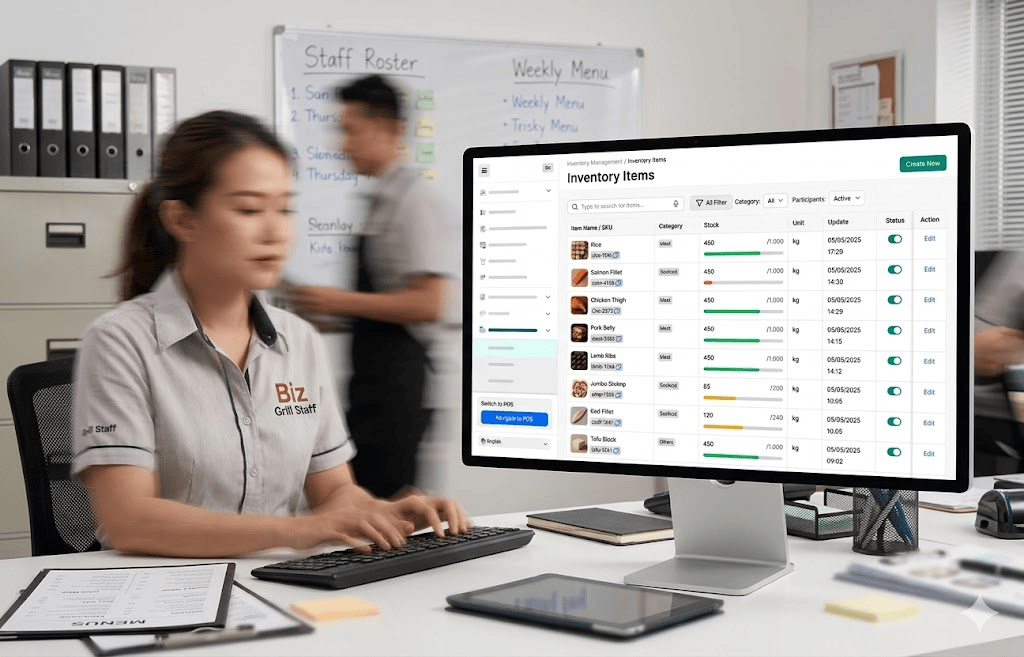
- Inventory Management
- Purchase Orders
- Order Management
- Reservations & Events
- CRM
- Campaign Management
- Payment Management
- Multi-restaurant / Chain
Role & Scope
As an independent Product Designer, I had full ownership over design direction, leading and defining solutions across the entire system.
I needed to uncover pain points and required features to empower users in selling and restaurant management — increasing conversion, digitizing tedious operations, preventing revenue leakage, and optimizing costs and workflows.
System scalability
Unlimited
Sync across multiple branches and warehouses.
Setup Speed
2
x
Faster deployment for new branches or menus
Workflow Optimization
30
%
Increase the efficiency of daily management tasks.
Context & Problem
What is the product?
Back-Office is an operations management system for restaurant owners and internal staff — a centralized hub to manage multi-unit inventory, detailed product configurations, and all business activities of a restaurant or chain.
What does the business need?
- Replace previously manual, fragmented management processes.
- The goal is to digitize cumbersome operations, help restaurant owners prevent revenue leakage, optimize costs and workflows, while still protecting sensitive data and customer information.
What are users struggling with
- Before having full features, staff in different roles had to wait for cross-department information confirmation to complete tasks — processes were fragmented with no centralized hub.
Design question
- "How can restaurant owners and staff manage all operations — inventory, orders, customers, payments — in a centralized system, without manual processing, fragmentation, or cross-department confirmation delays?"
System Overview — Modules
What it is
What it solves for users
Product Management
Enter and manage detailed information for each product
Save time adding new products, easy to edit and manage product information
Menu Management
Build and update the restaurant menu
Manage menus, handle flexible item options, or set up combo meals
Inventory Management
Track stock across multiple units, waste rate, and loss
Keep goods always ready to serve customers, control stock loss
Purchase Orders
Handle raw material orders from suppliers
Fast stock replenishment, support for better pricing and supply chain
Order Management
Track orders in real time
Staff and managers see order status as soon as it happens
Reservations & Events
Manage table bookings, with event and banquet management
Staff know in advance when the restaurant will be busy, so they can prepare
CRM
Manage customer information and company lists
Protect sensitive customer information
Campaign Management
Create and manage promotions
Control and improve the experience of setting up promotions
Payment Management
Integrate with third-party payment providers, track transaction lists
Protect customer payment information, keep transactions transparent
Multi-restaurant / Chain
Manage multiple restaurants under one merchant account
Chain owners manage all stores in one place, no need for separate systems
Results & Feedback
Qualitative
After all features were complete, staff reported that each feature helped them resolve tasks faster — no more waiting on multiple teams to confirm information like before.