Role:
Design Leadership
Platform:
Web Application (SaaS)
Team Size:
1 SM, 1 PO, 1 BA, 6 engineers
Project Duration:
3 years +
Project Overview
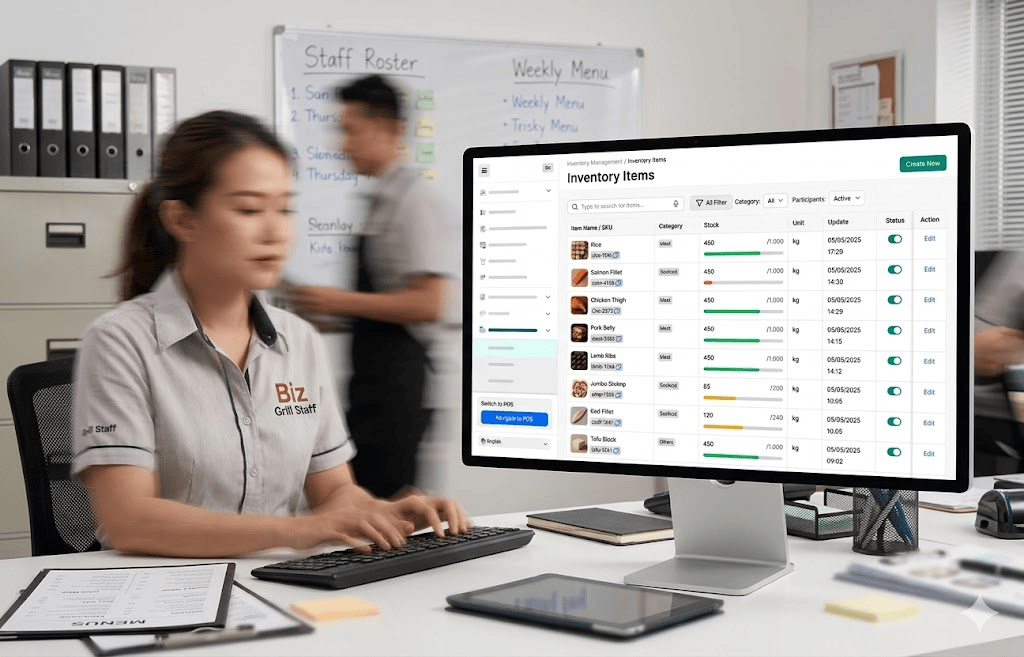
Point of Sale system for Norra's restaurant chain ecosystem — software to completely replace pen-and-paper and manual order-taking processes.
Goal: staff operate fast, make fewer mistakes, with no need for retraining.
Context & Problem
The restaurant is running on paper — and all the problems that come with it
Before the POS system, waitstaff used paper and a pen to write down orders by hand. They brought the paper to the kitchen, then the cashier had to type everything into the machine again.
Each table could have more than one sheet of paper. During busy hours, there were many handwritten orders.
Consequences:
- Staff might write the wrong item — the kitchen makes a mistake, and the guest is not happy.
- The waiter spends time looking for items in a long list
- When the restaurant grows to more branches, managers find it hard to get enough data to track everything
The Approach
Not about redesigning a completely new POS system — but using what other POS systems already have, to build something simple and easy for restaurant staff.
The goal is: when staff look at a button, they already know what it will do.
"We won't redesign the wheel."
Other POS systems already have a table map, item list, and payment button.
Norra's POS has all of that too — but faster, with fewer mistakes, and smarter where it matters.
User Research & Analysis
Two groups use the POS every day, with completely different needs:
Waiter
Cashier
Task on POS
Open tables, take orders at tables, track item status
Process payments, manage total bills
Main pressure
Don't keep guests waiting when ordering
No calculation errors, no closing wrong tables
Environment
Always moving, uses a device to manage tables
Standing at counter, larger screen
→ One interface must serve both groups at the same time.
Design Solutions
- Table Management
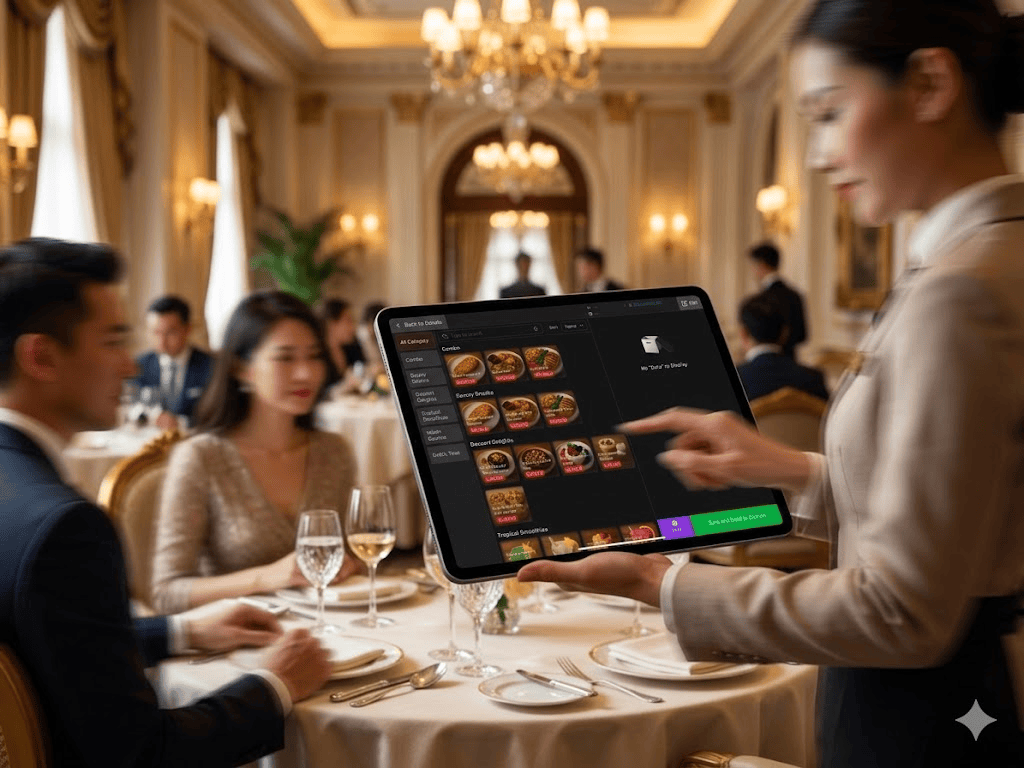
Instead of managing table and counter information with pen and paper the traditional way, all information is displayed directly on a single device.
Table Floor Plan
- Manage the floor plan on the system, matching how tables and chairs are actually arranged in the space.
- Staff can easily identify each table: which has guests, which is empty — no need to physically confirm.
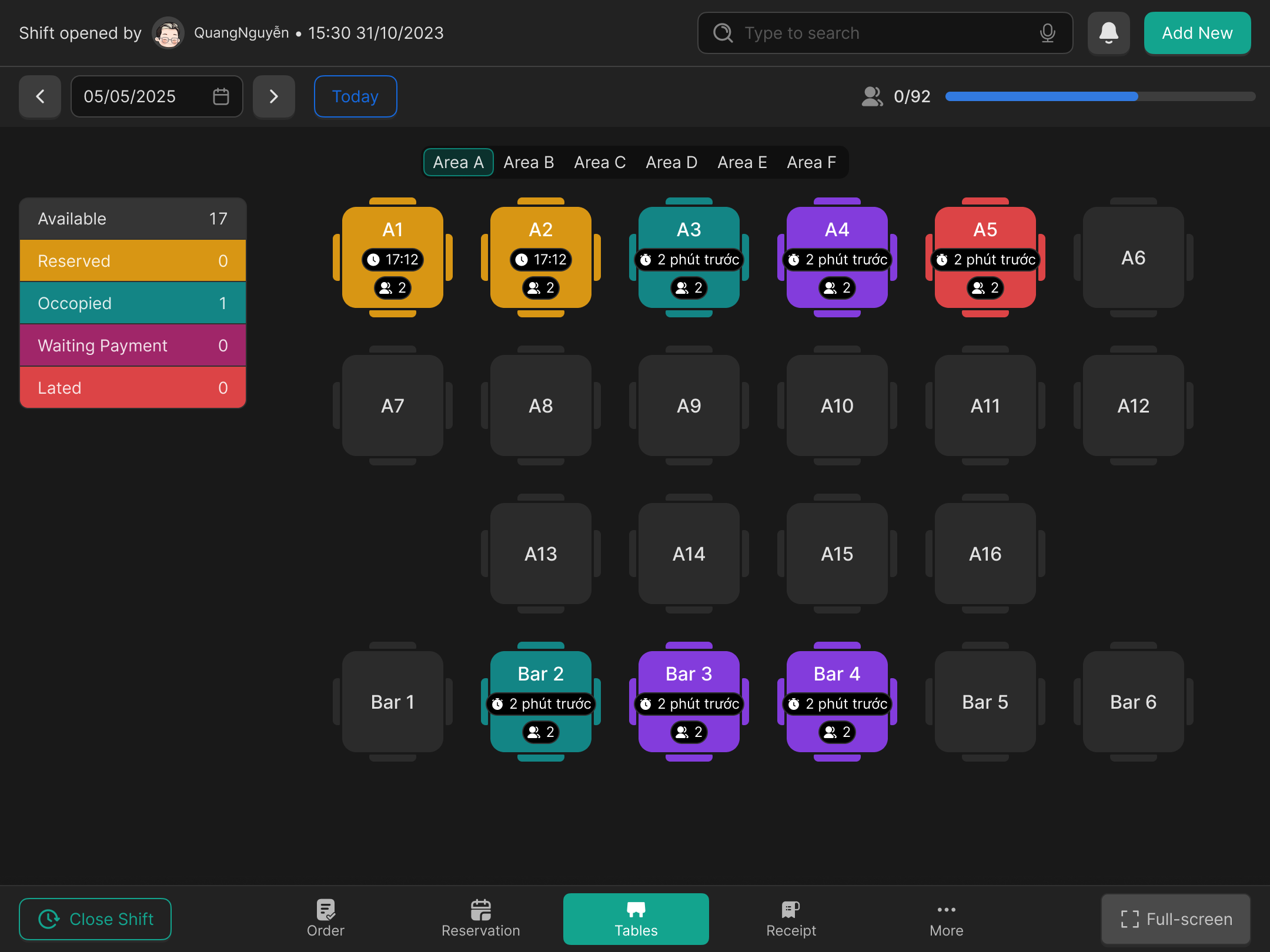
Colors Replace Text
Thanks to a pre-existing design system, all status colors are synced with each other.
Staff read the floor map faster.
Color
Table Status
Gray
Empty Table
Orange (Warning)
Reserved Table
Cyan
Occupied Table (guest seated)
Magenta
Waiting for Payment
Red (Error)
Reserved but Guest is Late
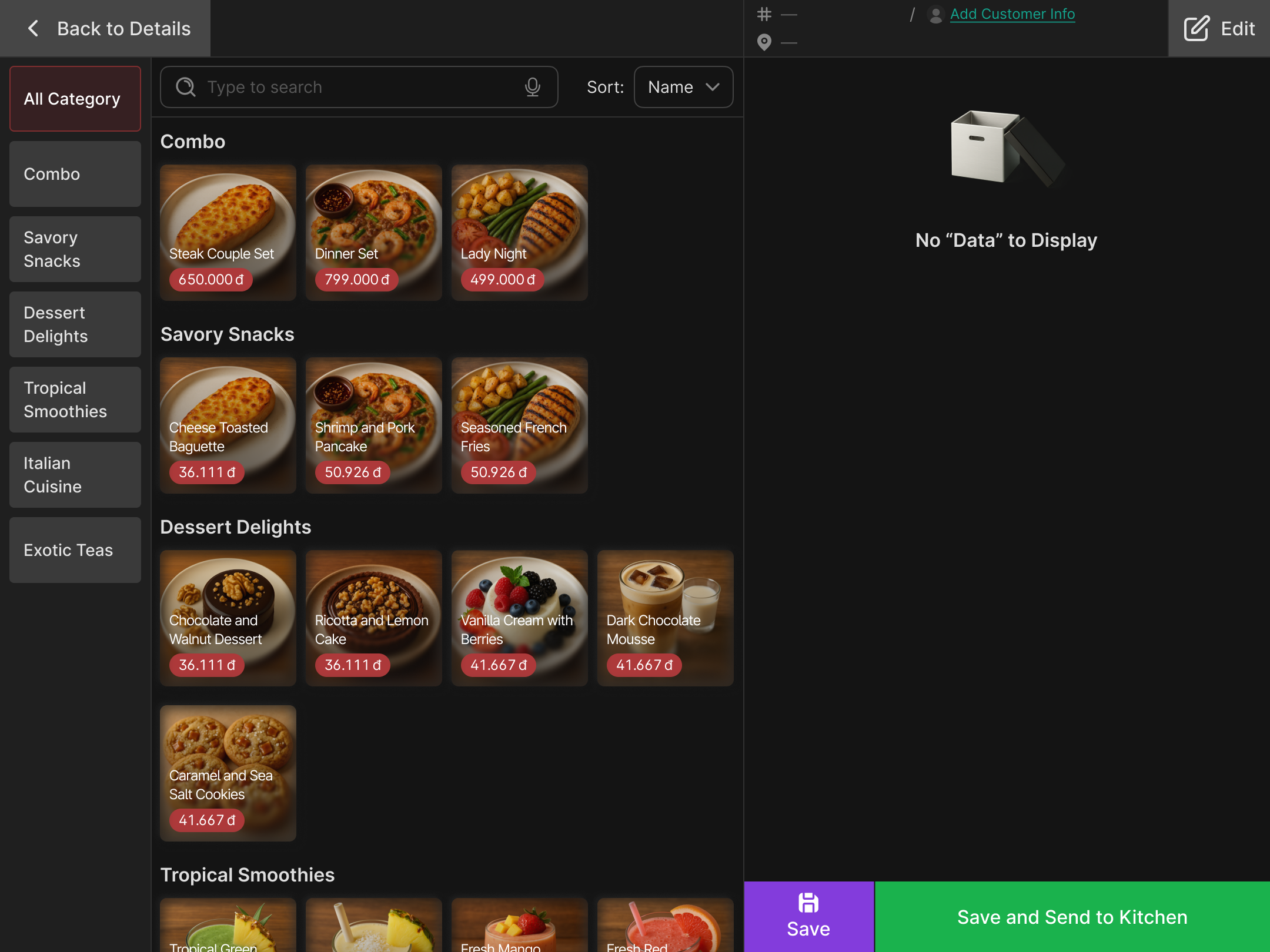
- Faster item search, no need to scroll the entire list
Problem 1
A restaurant can have dozens to hundreds of items. Staff can't memorize all of them, and don't have time to scroll through every page. Although items can be grouped by category, it can still cause difficulty for users.
Solution:
- Smart search that suggests items after typing 2-3 characters
- Filter by category (starters, mains, drinks, etc.)
- Best-selling items are pushed to the top of the list
Problem 2
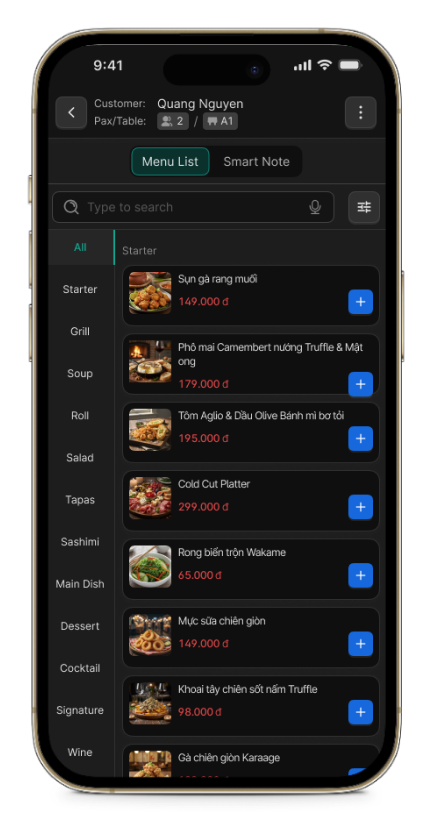
Guests often order 5–7 items at once, each in a different menu category. Staff must:
- Memorize each item the guest just said
- Find each item in the list
- Tap to select each item one by one
On an iPad, the keyboard takes up half the screen. Searching and typing continuously while guests wait — slow, error-prone, a poor experience for both sides.
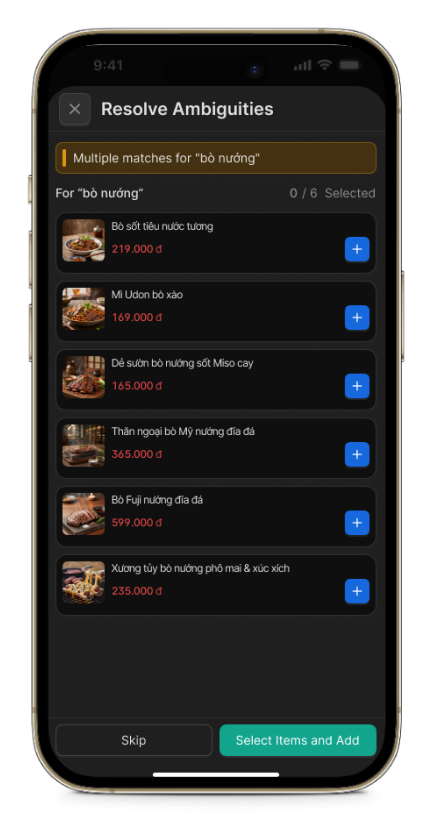
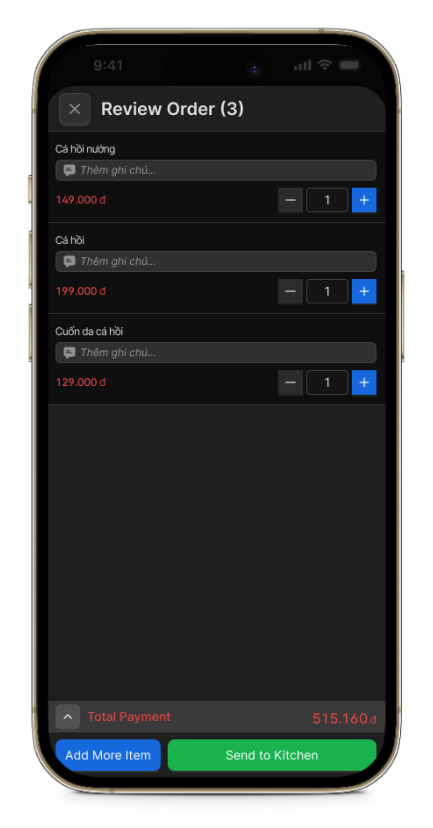
Solution:
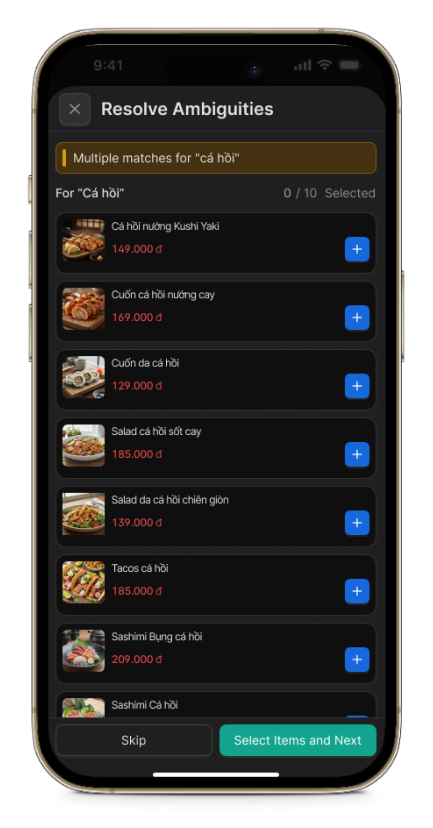
- Instead of searching item by item, staff just quickly jot down everything the guest ordered — like writing a quick draft on paper — then confirm. The system handles the rest.
- QR Self-Ordering
Problem
During a dining experience, guests don't always need a staff member's help. They may just want to view the menu without needing a physical menu or the restaurant's device.
Or during peak hours, when staff can't help fast enough, guests may have to wait.
Solution:
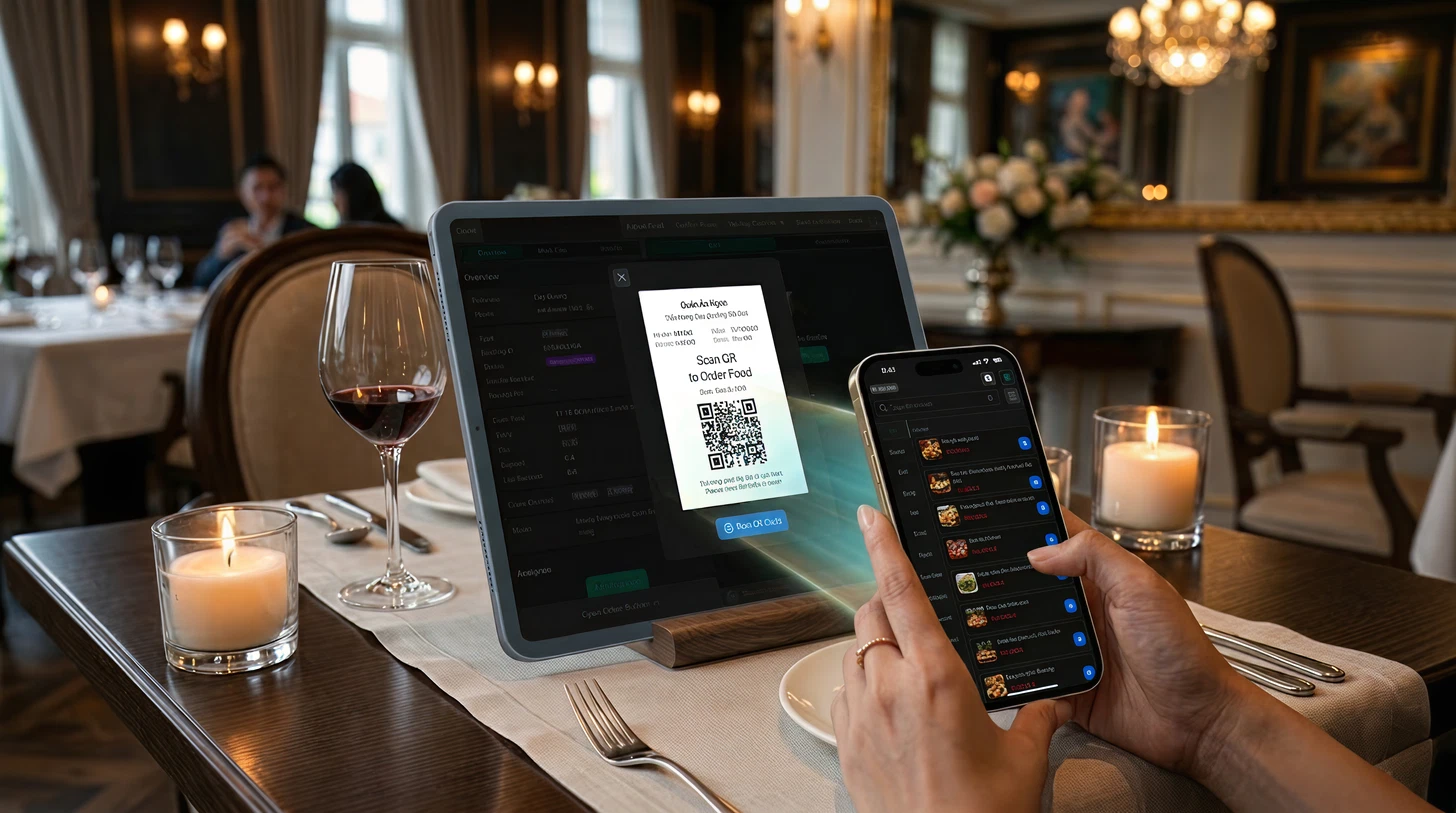
- Each table has one fixed QR code.
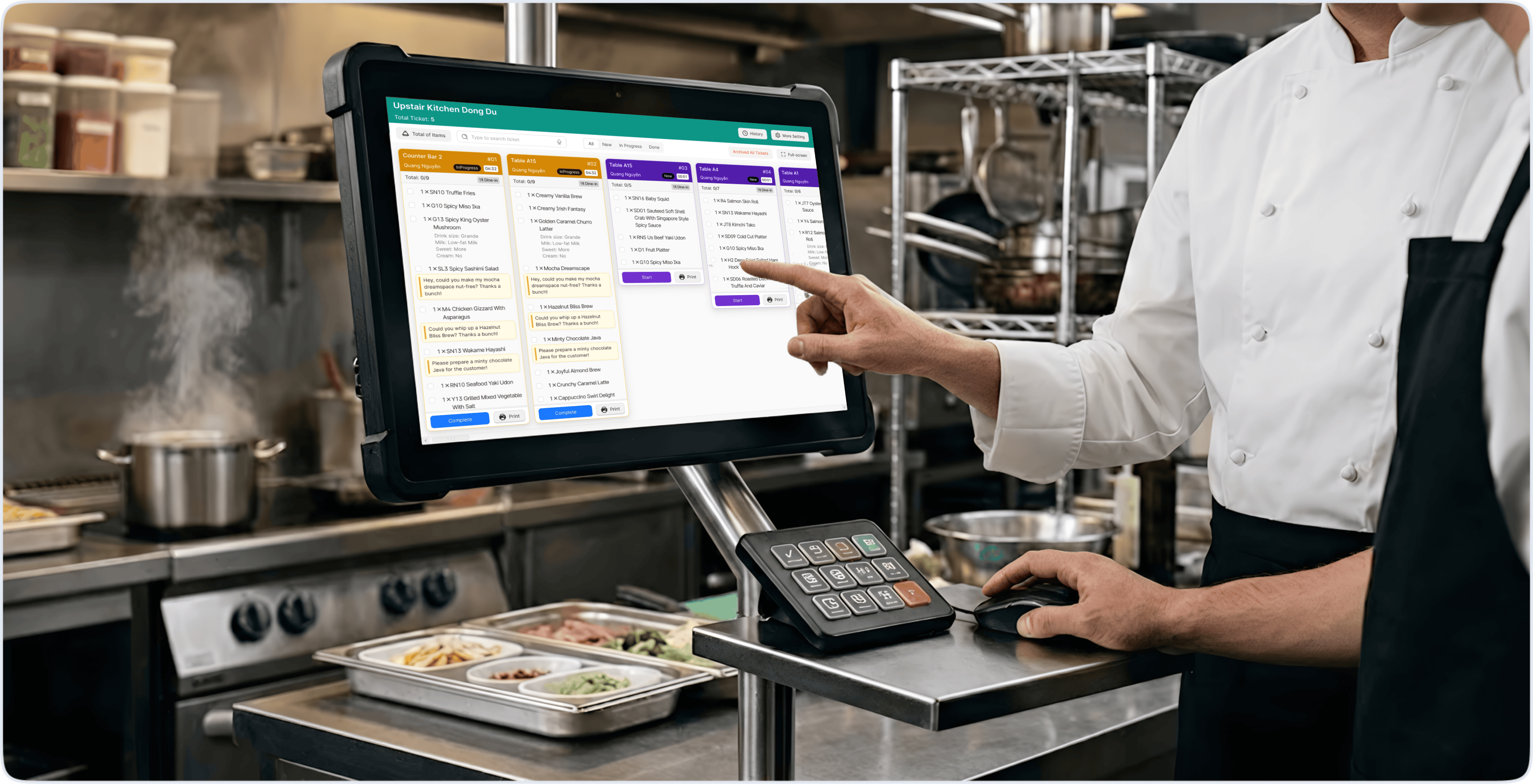
- Guests can scan the QR code to view the menu at any time, select items, and place an order. The order automatically appears on the POS screen, linked to the correct table number. Dishes are automatically sent to the kitchen.
- Guests can review a summary of all the items they've ordered.
Important details:
- QR orders appear with a "QR · Table [number]" tag, so staff or cashiers know it is a guest-placed order, not one entered by staff, during the guest's visit.
- Guests can still request staff assistance for ordering while also self-ordering via QR at the same time.
Results & Feedback
Results
The system has been deployed live across multiple restaurant chains and is operating stably.
Feedback from actual staff:
Feature
Before
After
Waiter ordering
Hand-write orders on paper, bring to counter for re-entry
Enter orders directly on device, sent to kitchen immediately
Item search
Time-consuming to find items in a long list
Enter full order at once, confirm — system suggests similar items for faster confirmation.
Customer recognition
No way to know if the table guest is new or a regular
Know the name, visit count, and preferences of returning customers
Customers don't always need staff
Staff constantly walk to each table to take orders
Guests self-order via QR, staff focus on service
The best design isn't what people admire — it's what users forget they used, because it feels as natural as if it had always been there.